
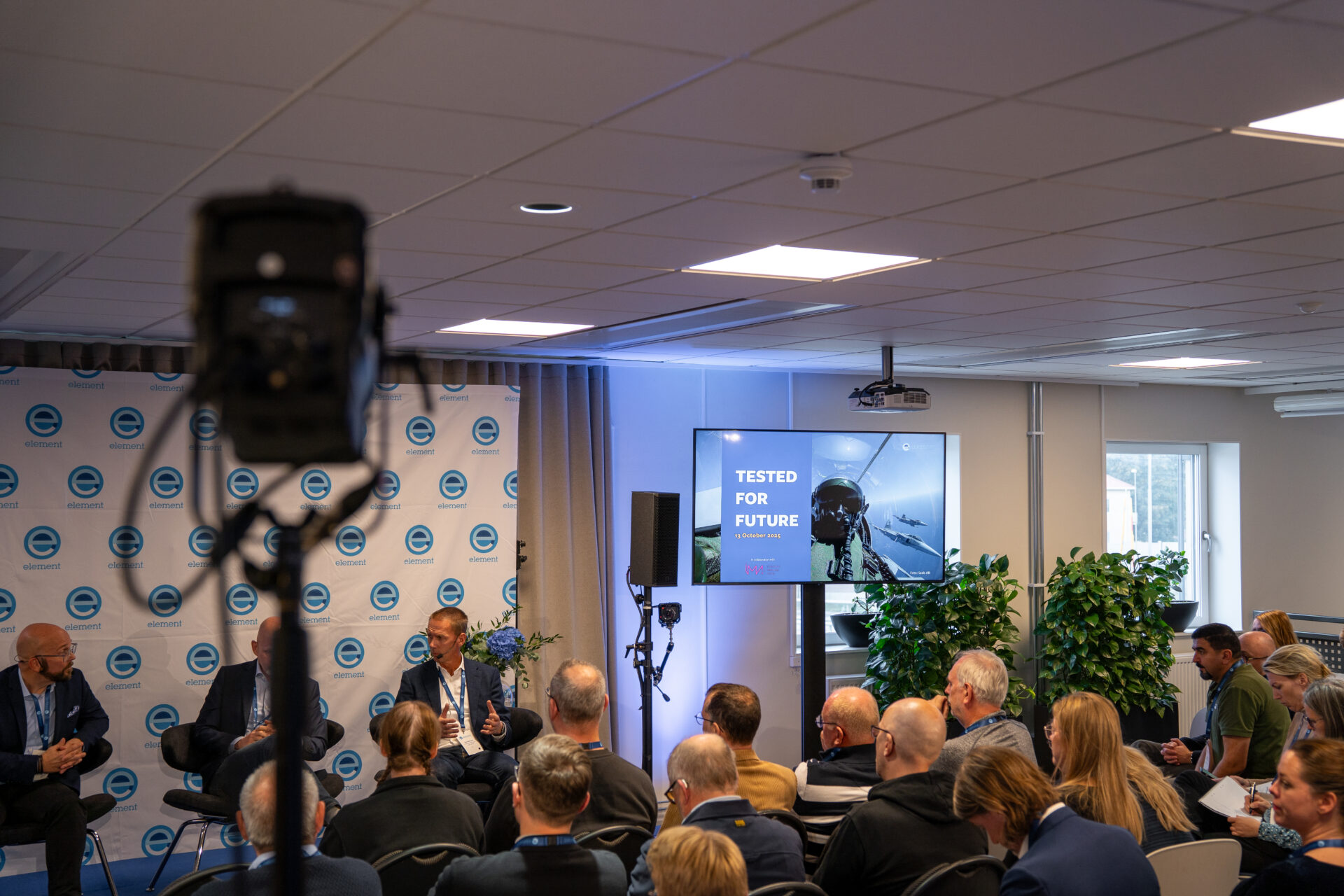
At yesterday’s event, “Tested for Future,” which we co-hosted together with Element Materials Technology, almost 100 participants from defense, industry, and society gathered for a full day featuring keynotes, a panel talk, a guided tour, and a live broadcast from Ukraine.
The day opened with Lars Helmrich, former Director for Air and Space Systems at the Swedish Defense Materiel Administration (FMV), who set the stage for the day’s discussions. He emphasized the importance of humility and adaptability toward the future, that we as a nation can never prepare perfectly, but that the ability to adapt will be crucial. Those who can adjust quickly when reality changes are also the ones who stand the strongest.
Helmrich also highlighted the central role of industry in national defense capability, where today’s challenges revolve around capacity, supply chains, and the ability to rapidly scale up production. The war in Ukraine has shown that the conflicts of the future will be as much industrial as they are military. Here, Sweden, and especially IMA’s member companies, have a key role to play, contributing expertise and fostering closer collaboration with the defense sector. Among the technologies that FMV has identified as particularly relevant are additive manufacturing, quantum technology, and AI/digitalization.
But to make all this happen, the consensus throughout the day was clear: government agencies and companies must move closer together. This theme, along with topics such as industrial responsibility and resilience was further explored in the panel discussion that closed the day. The conversation brought together Lars Helmrich (FMV), Björn Kullman (Element Materials Technology), and Håkan Carlberg (Tekniska verken), following a guided tour of Element’s facilities.
Helmrich noted that there is still a gap to bridge between the public and private sectors:
“FMV needs to understand what civilian products and companies exist and how we can make use of them, and companies, in turn, need to understand how to [better] engage in public procurement.”
The panel agreed that building a resilient society requires both speed and reflection, Sweden must be able to act quickly in times of crisis while also developing long-term competence and collaboration structures.
Thank you to all who made this day possible!