
The future of e-textiles is graphene.
Imagine wearing an advanced e-garment that can regulate temperature, monitor your health status, sense your touch and body movement, shield you from detrimental electromagnetic radiation – and at the same time looks like a regular T-shirt, jacket or blazer. Graphene that works is the vision – and a reality – of a Linköping-based company Grafren, a spin-off from LiU, with potential customers in defence, extended reality (XR) and sports wear industries.
In what ways can graphene make the world a greener place, how does Grafren’s technology work and what’s next for the company? We asked Erik Khranovskyy, PhD, co-founder and CEO.
What is graphene and why did you choose to work with it?
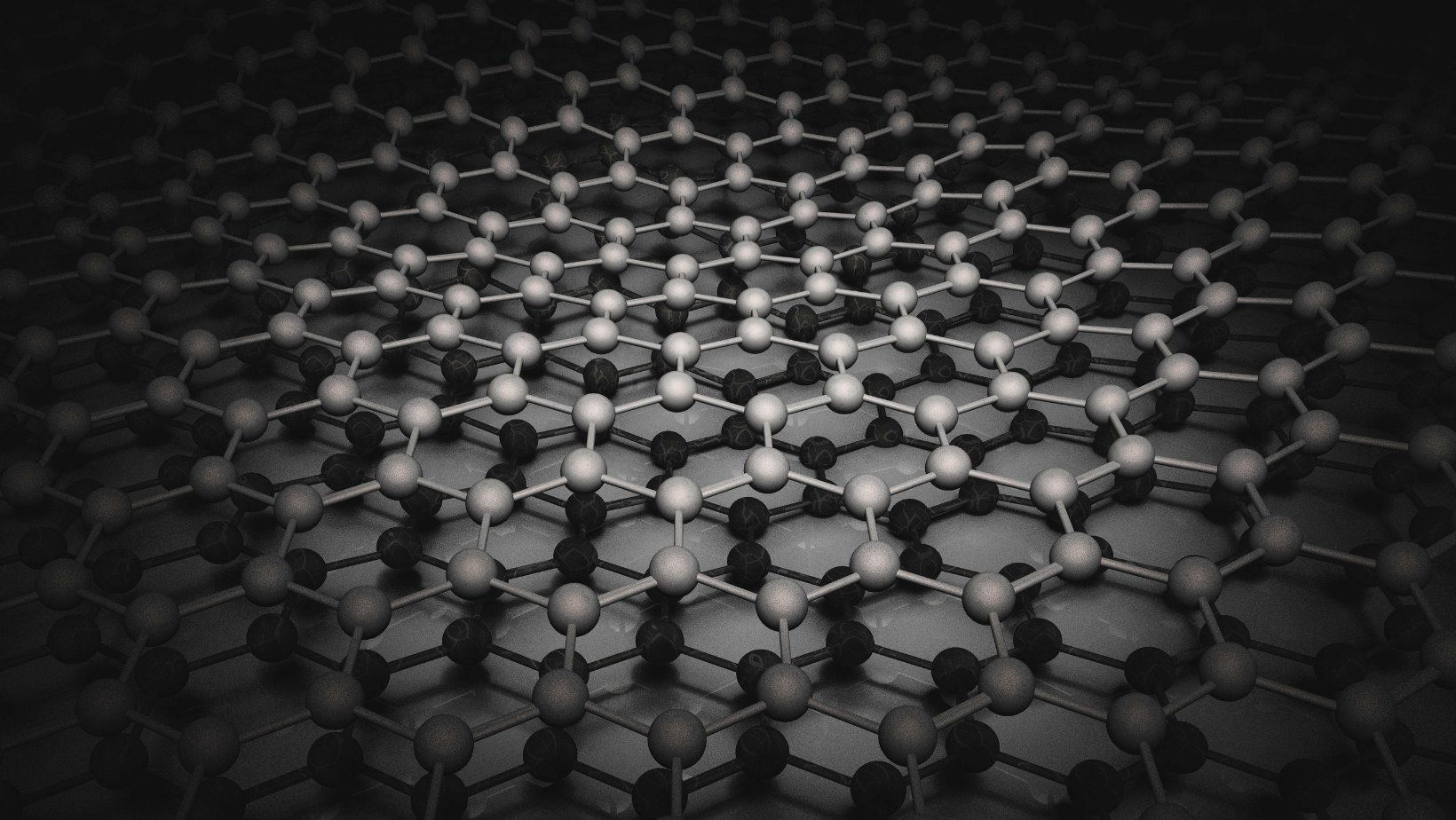
Graphene itself is a relatively new material with some truly magical properties. It has high electrical conductivity, mechanical strength and chemical stability. My team and I saw an opportunity to transfer graphene’s properties onto other materials, in our case textiles, and make new advanced materials with extraordinary properties that may have numerous applications in real life. In doing so, we either enable new solutions to existing problems or substitute other, less environmentally-friendly materials such as metals and plastics, since we don’t use any binders or polymers.
What makes graphene a sustainable material?
There are two sides to this question. On one hand, graphene as a carbon – coal – comes from mining, which is unsustainable, even though there are technologies available to extract graphene from wood waste or even CO2 in the air. On the other hand, the things that graphene can do and the properties themselves have a huge potential for the green future, replacing other, even less sustainable materials – and it would only require a tiny amount of graphene to achieve that.
What applications and advancements across industries can be enabled by your technology?
The applications are many. Electrical conductive textiles for heating (sport- and outdoorwear, e-transportation and house interior, warm workwear for extremely cold conditions etc); lightweight shielding, sensitive electronic equipment from detrimental electromagnetic radiation or radars emission absorbing camouflage nets; textile sensors inside the body suits for extended reality and Metaverse applications, biomonitoring sensor’s electrodes, that are soft, invisible and breathable; finally, lightweight, strong and smart graphene composites for future transportation industry.
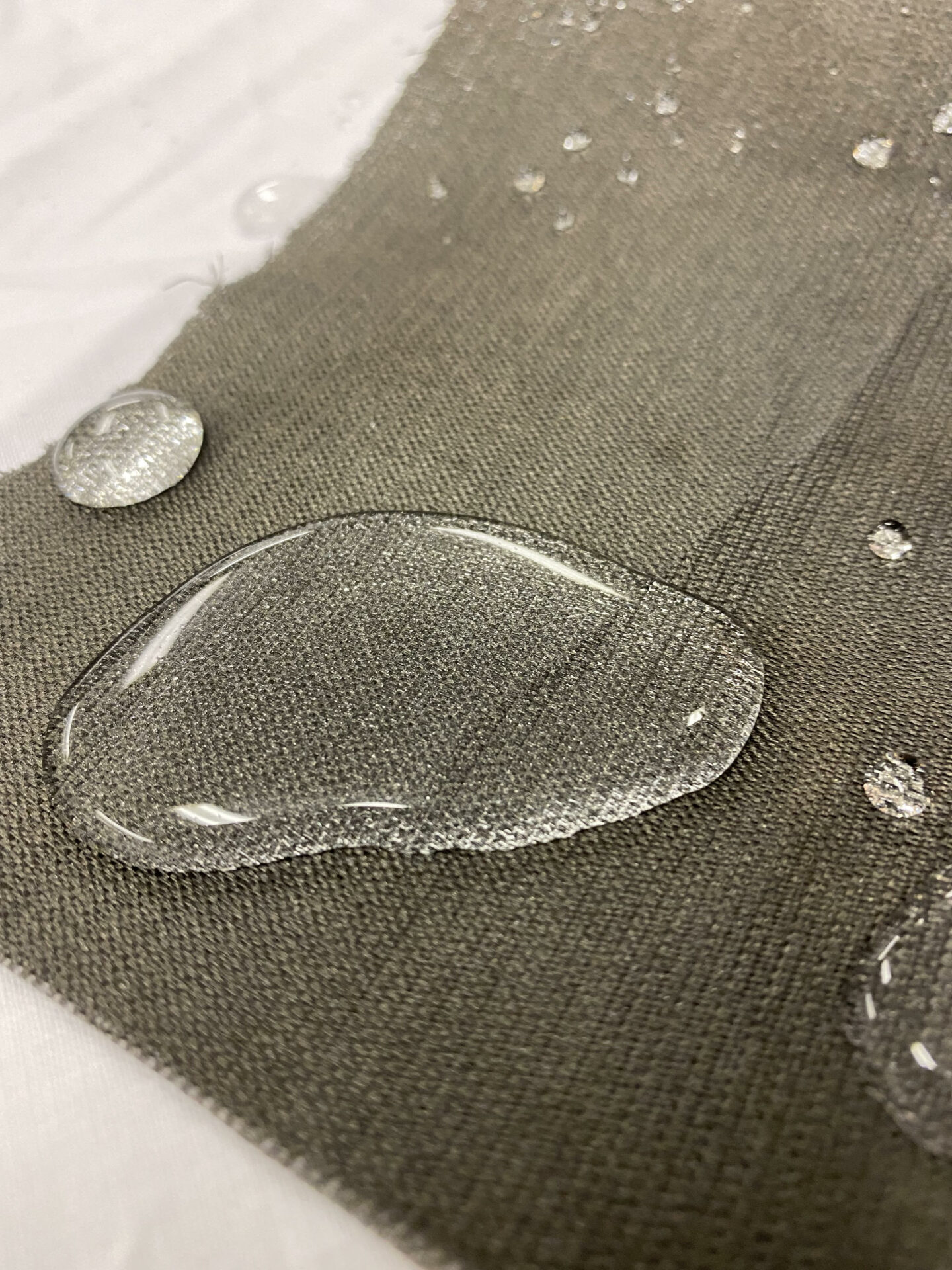
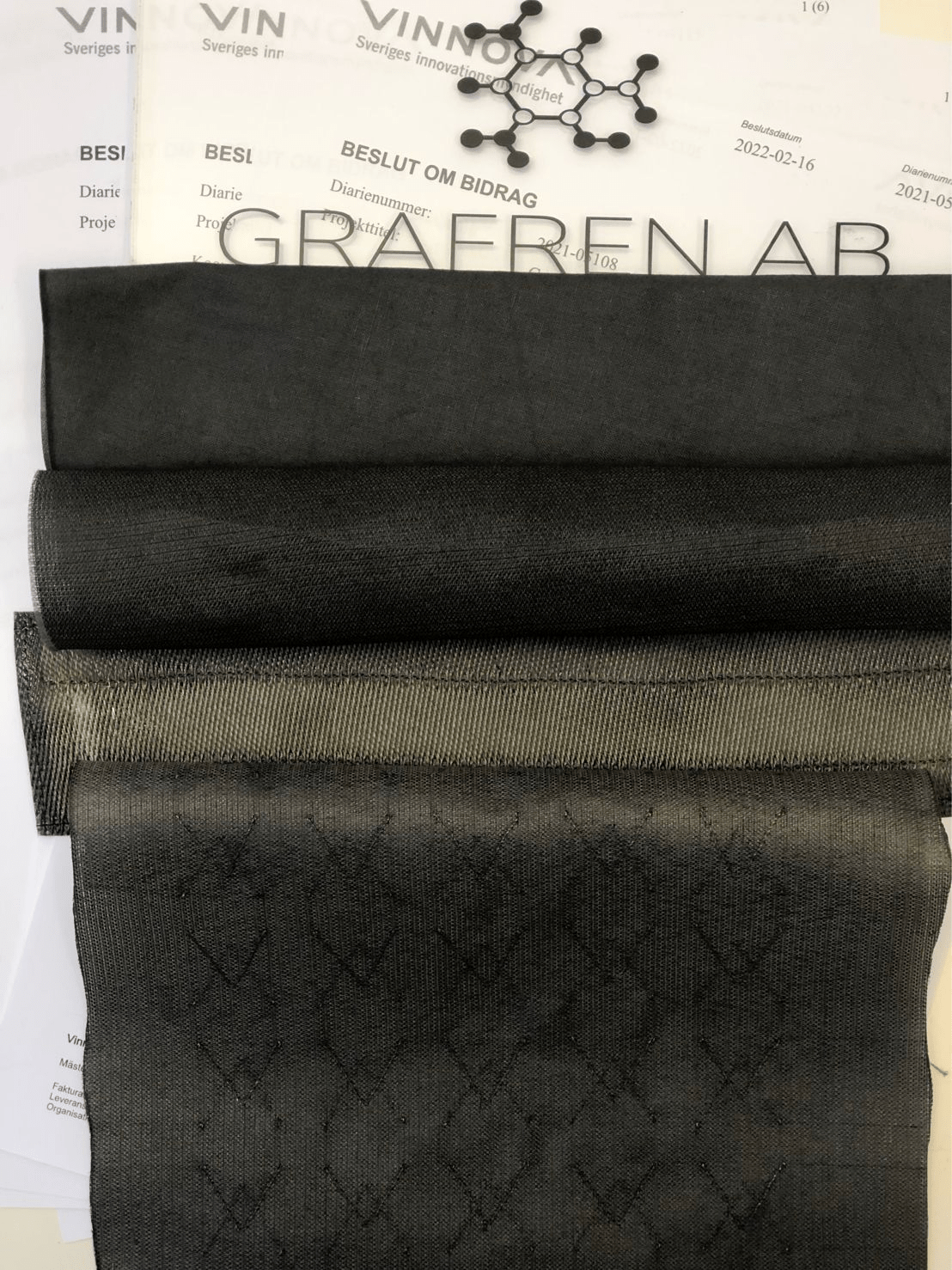
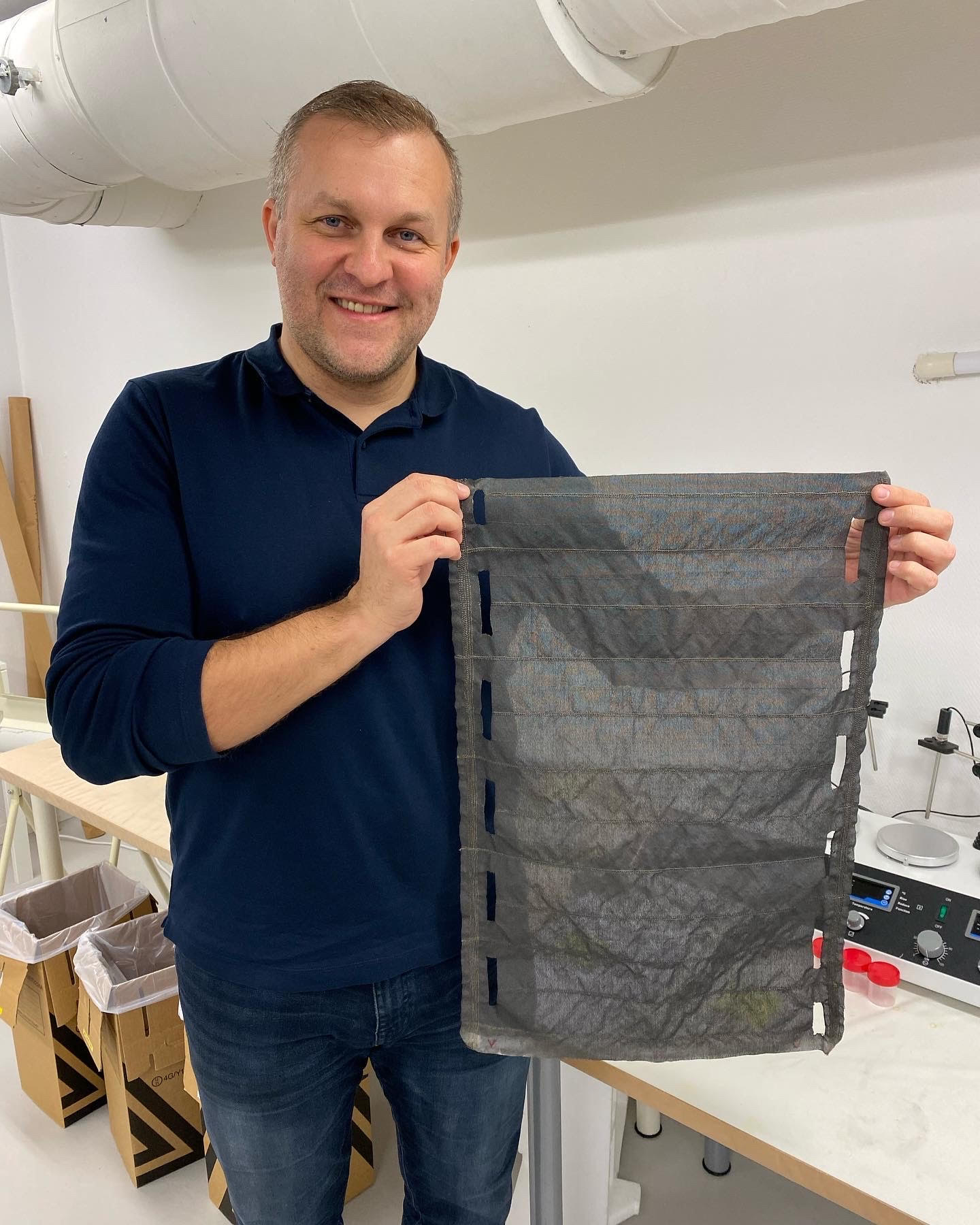
Grafren’s electrically conductive fabrics made with graphene coating.
You mentioned that one of the issues on the market today is the low quality of graphene, which can lead to false research findings and serious product defects. Is there any viable solution for this?
The quality of incoming graphene material is indeed a big problem. Not that many products today, if any at all, are based on graphene. This is, in my opinion, due to poor performance, which comes from a low quality graphene. Here at Grafren, we developed a separation technology that allows us to remove impurity and non-graphene fractions with 99% certainty. We work with water-based dispersions which contain small thin flakes of graphene. Through application of a special mechanical treatment, we are able to separate them into different fractions, based on their thickness and lateral size. This is what defines graphene quality for many applications.
You have recently been issued two patents, tell us about them.
The first patent covers our expertise in extracting high quality graphene and the second one is for making graphene-coated textiles. We have found out that adding only 1 to 4 grammes of graphene will make the fabric electrically conductive, and the conductivity can be tailored during the manufacturing process. We can use diverse textile materials for coating – organic (cotton, wool, silk), polymer-based (polyamides family, including aramids Kevlar, Nomex, Technora etc) and even inorganic fibers like carbon, glass of basalt.
You are coordinating an investigative project together with Chalmers and Chalmers Industriteknik on the possibility of manufacturing graphene from battery waste. What are you planning to achieve and what findings have you made so far?
Batteries are coming – in huge amounts! While it is possible to prolong the lifespan of batteries that no longer qualify for electric cars and re-use them somewhere else, eventually they will still have to be recycled. Those batteries have 30% to 40% of graphite which will later get burnt. The problem is that the waste may create a negative cost value and a eventually dangerous situation for landfills. There is no viable solution as to how and where to re-use it today, so we are doing a feasibility study, an assessment whether recycled graphite from batteries can be a new source of graphene. The project has only started so we are at the very early stage. But – just imagine – one of the world’s most expensive materials is coming from waste!
How do you see graphene being used to further sustainability into the future?
Graphene and the materials based on it will enable more efficient energy transformation – for example, our G-HEATEX fabrics which are partially emitting in far IR range, they need less energy to heat a human body. The beauty of IR heating is that it is not wasted on heating air but penetrates into the human body, keeping us warm. Another direct aspect of graphene is weight: we need only a few grammes of graphene in order to change the property of the composites, making it stronger or smarter. Eventually, this will enable weight reduction for the transportation and fuel consumption.
We can provide a sustainability report on each of the graphene-based products that we develop together with our partners, and each of them has a positive environmental impact.
What would you say is the biggest challenge you face as a company?
It’s definitely a variety of the potential products. What we have is a unique technology, enabling plenty of novel products in diverse market segments. This is a real challenge since it requires a rather wide range of tasks. But we love challenges!
Photos: Grafren, IMA.