
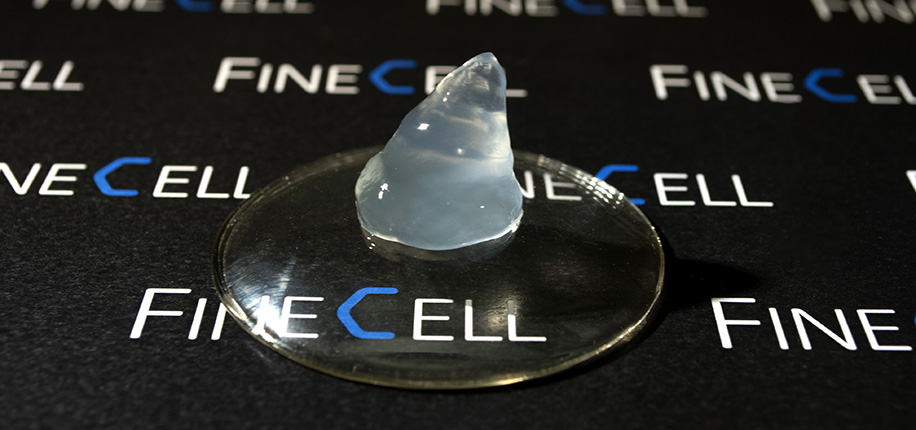
FineCell is a spin-off company from KTH Royal Institute of Technology that offers sustainable cellulose microfibers which help manufacturers make new products with improved performance, differentiated properties and reduced environmental impact.
FineCell is currently in the process of scaling up their production technology, having received support from Sweden’s Innovation Agency Vinnova, EIT InnoEnergy, KTH Holding, Kiram and GAEU Consulting. What are cellulose microfibers, how does FineCell work with sustainability and what projects are they currently involved in? We asked Jonatan Henschen, co-founder of FineCell.
What properties are unique to FineCell’s cellulose microfibers?
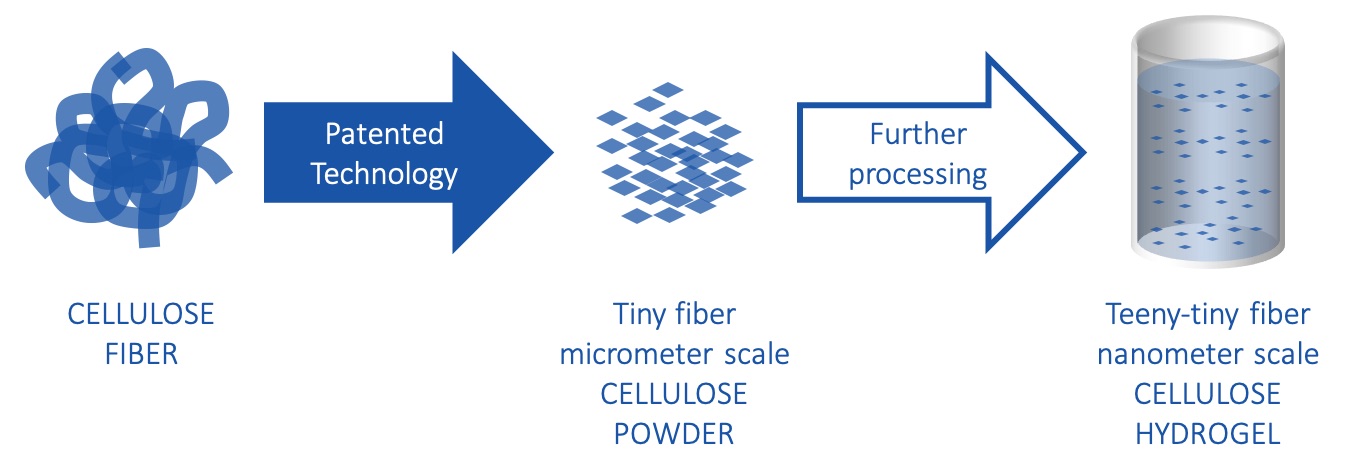
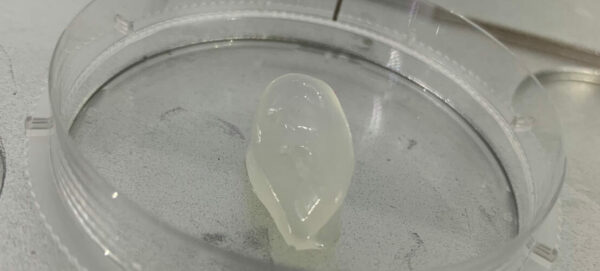
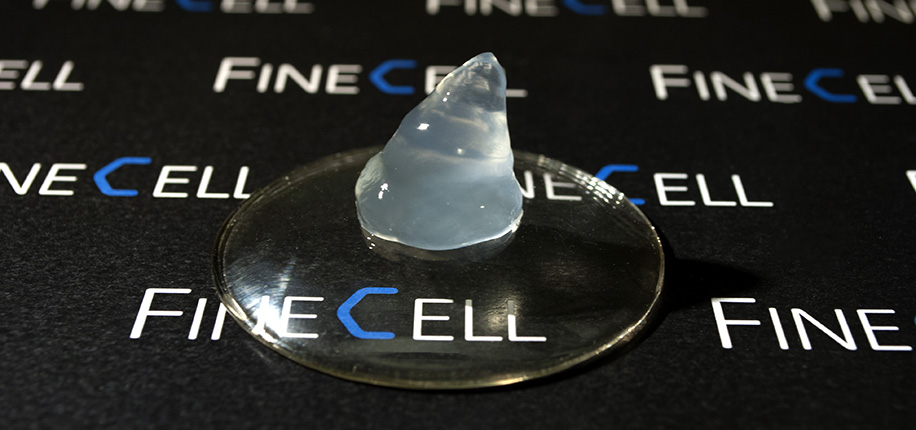
FineCell has a patented technology to prepare a cellulose which is rather similar to microcrystalline cellulose. The advantage with our process is that it is energy-efficient, and the product is easy to disperse into smaller components in different systems. This can be used for example to prepare nanocellulose hydrogels, a water-binding material and can be used as a thickening or emulsifying agent. The material, when dried, can also improve the mechanical properties of for example surface coatings and paints. Another way to disperse the microcellulose is to add it to a plastic during production, this has the potential to, in an easy way, result in light weight composites which are cellulose-reinforced. We see that this has great potential to be used to upcycle recycled or biobased plastics and make them competitive with conventional fossil-based plastics.
How does your product compare to others based on the product and application life cycle?
The fact that we are able to add our microcellulose and disperse it in many different systems in an energy-efficient way reduces the emissions linked to the production. We also see that when the material is applied in a composite, it is possible to decrease the weight of many components as well as to use recycled raw materials instead of virgin ones, which is a huge benefit.
FineCell’s business idea and ethos revolves around sustainability and it is something they take into account when planning all their work, from performing LCA and calculating the potential reduction of future CO2 emissions to choosing the application areas in which their products will be used.
Earlier in 2021 FineCell received 3.5 million SEK worth grant to conduct research on design and development of recycled and bio-based alternative to fossil-based plastic, together with KTH Royal Institute of Technology in Stockholm. How is it going for you?
The project is still in an early stage, but the goal is to develop a good formulation and processing procedure to enable a good dispersion of our products in biobased and recycled plastics which has properties comparable with the most common fossil alternatives used today. Based on our earlier work we do see that this will be possible to achieve using conventional processing equipment. By the end of the project we expect to be able to approach a partner with clear instructions on how they should handle our products to obtain the desired properties of a produced plastic component.
You’ve also currently using BioInnovation’s Test your hypothesis* service, what hypothesis are you testing and how do you expect this project will help you with product design and development?
This project is very closely related to the project above, we study the fundamental principles on what drives a good dispersion during processing which is essential for providing a good reinforcing effect when adding our products. Project results will help us get a better idea of what to consider when preparing plastics containing our cellulose products.
Is FineCell at all affected by sustainability-related legislation and regulative policies, if yes how?
In the long run, when setting up an industrial production site for our materials we will definitely be directly affected. Even today we are affected but mainly through our contacts with potential customers. We see an increase in a number of companies actively searching for alternatives to the materials and processes.
In general, what is your company’s biggest challenge?
FineCell is developing a material which is new, and in some ways disruptive, which has the potential of solving many of the issues the market is facing. In order for the market to accept our solution it is important for us to show how this can be done in a good and simple way. This means that even though FineCell’s main focus is to produce and develop processes to prepare microcellulose, we put a lot of effort into developing the processes that our future customers and partners will use. This naturally widens the areas of our expertise as a company.
And what is your biggest challenge when it comes to sustainability and circularity?
Even though many companies are looking for new alternatives, it is much more difficult to find the ones that are actually willing to make a substantial change instead of just improving some minor details. In order to solve the issues we are facing in terms of sustainability it is necessary to think beyond the easy solutions, like for example choose completely new sustainable materials instead of just introducing a few percentages of biobased or recycled raw material within a predominantly fossil-supported solution. The simple solutions might sound good but they do not necessarily solve the problem.
*Test your hypothesis is a service by BioInnovation for projects that aim to verify, confirm or dismiss innovative proposals for a more comprehensive project. Those proposals are usually of higher risk, hence the need to test the hypothesis. Test your hypothesis is primarily for manufacturers, suppliers and users of bio-based materials, products and services, but even universities, colleges, research institutes and other relevant players can apply, too.
Pictures: FineCell