
Cellfion, founded in August 2021, is a start-up manufacturer of nano-cellulose membranes for electrochemical energy storage and conversion devices who wants to take an essential step towards a more sustainable future. Derived from leading research at KTH Royal Institute of Technology, Linköping University and RISE, Cellfion offers membranes based on biomaterials from the forest – an elegant solution that is both safe and sustainable.
The most recent addition to our Network, Cellfion has ambitious goals and passion for sustainability:
We strive towards the advancement of green energy technologies. Electrochemical cells e.g. Redox Flow Batteries, Electrolysers and Fuel Cells are the backbone of the renewable energy industry playing vital roles in energy storage and conversion devices. The performance of the device is dependent on the membrane, which needs to have tailored characteristics for each specific application. Reliable, high-performing membranes are a requirement for the advancement of these green technologies. Cellfion offers nanocellulose membranes with properties tunable for each specific application, says Cellfion on their website.
How do their membranes facilitate the green transition and what is in store for this young and promising start-up? We’ve asked CEO Liam Hardey!
Describe your business idea! What solution do you offer?
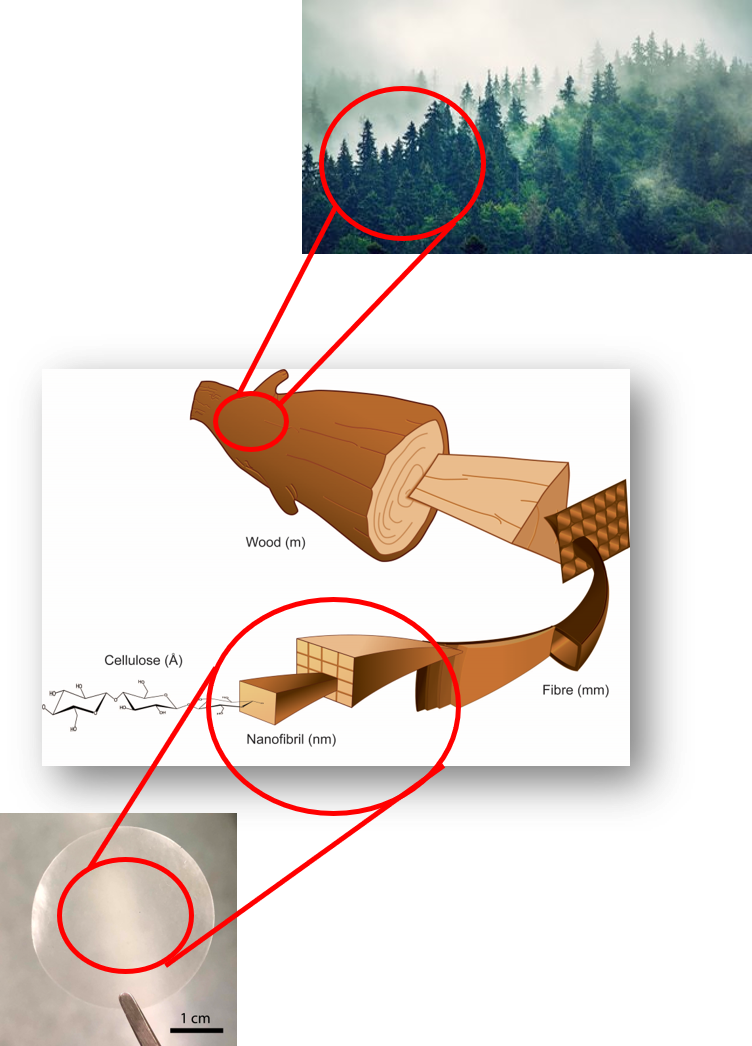
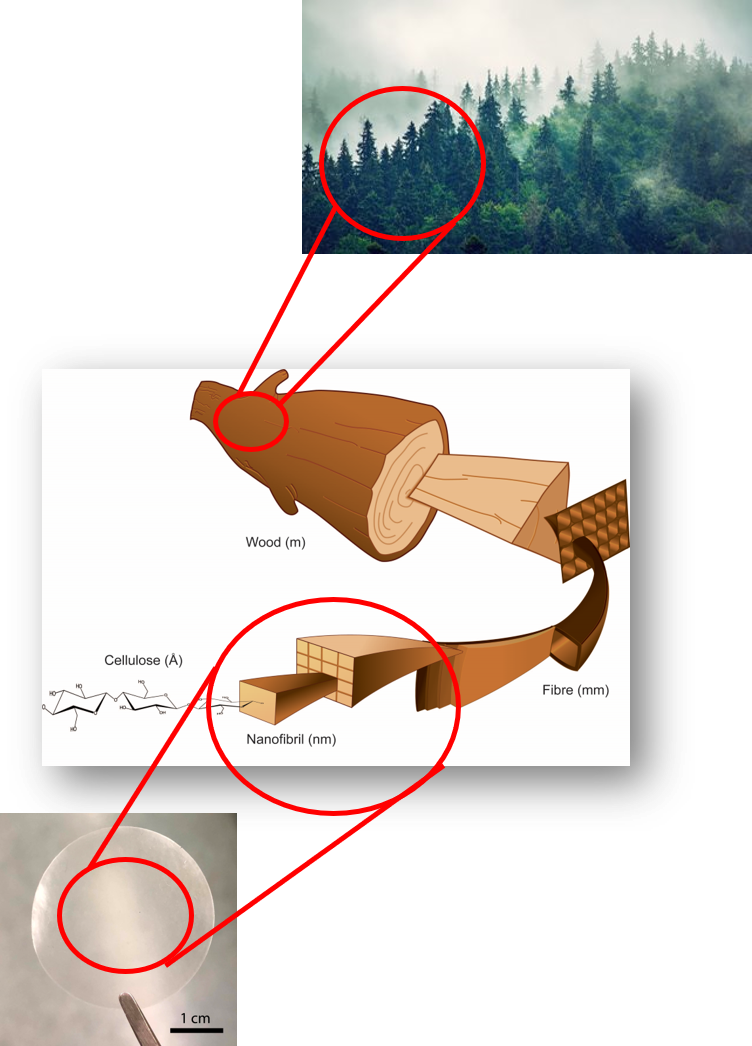
Cellfion develop and manufacture bio-based materials for clean energy devices. Our core product is an ion-selective membrane made from the most abundant bio polymer on the planet, nano cellulose derived from wood.
What properties are unique to your product compared to other manufacturers? How does your product compare to others based on the product and application life cycle?
Cellfion’s membrane is an innovative use of sustainable and abundant material, and the first to commercialise bio-based membranes for clean energy devices. Commercial, state-of-the-art membranes are usually fossil based, made from a polyethylene like material, the same that is found in plastic. Due to the unique characteristics of nano fibrils and the know-how of Cellfion’s team, we are able to tune our solution to the customer’s needs, whereas our competitors deliver standard products, which can lead to an increase in performance and the lowering of costs
Cellfion’s membrane has a clear advantage being bio-based compared to our fossil counterparts. At the end of the life cycle, Cellfion’s material can simply be incinerated without the release of toxic gasses as opposed to current commercial membranes that don’t have an effective way of being recycled.
Who are you customers and what possible applications can your product support?
So far, we have identified over seven different application areas for Cellfion’s membranes, however being a start-up, we don’t have the resources to focus on all seven directly which is why we are focusing on two niche entrance markets consisting of, PEM water electrolysis and Redox Flow Batteries.
PEM (proton exchange membrane) water electrolysis is used for the production of green hydrogen, a process where energy is taken from renewable sources such as wind and solar and used to power an electrolysis plant.
Redox Flow Batteries are an emerging battery technology that can be used for the storage of electrical energy and connected to the electrical grid to help with peak shaving or the storage of renewable energy.
Cellfion’s membrane plays a vital role in both applications as it is the central component and plays a key role in defining the performance of these energy storage and conversion devices. We often say that Cellfion is the heart of the cell.
Cellfion’s biggest challenge when it comes to sustainability is the dewatering of our membranes during production, although this isn’t a problem for us at the moment. When we start to scale our production, we may need to dewater as much as 100 litres per day, which can be a power intense process and being able to use the water in a circular business model will be a high priority for us.
Are you in the early stage of product business development and commercialisation, are you at all affected by sustainability-related legislation and regulative policies, if yes how?
At the moment we aren’t affected by sustainability-related legislations as we are in such an early stage with our technology. We will work actively with implementing sustainability into our business model throughout our start-up and scale-up journey.
Women tend to be under-represented in certain industries, of which materials and tech are quite lagging. How does it look for your sector? What incentives do you think can help get more women on board with your kind of product?
We see that there is still an under-representation of women in the energy industry, however, it is beginning to improve gradually. For us at Cellfion it is important for us to create an inclusive environment within our business, which is why we are working actively to diversify our board and employees. This is, however, often a challenge for us when trying to recruit scientists to our technology team as we often need to headhunt the person instead of receiving applications.
Does Cellfion implement any sustainability initiatives within the company?
Cellfion’s business model is built around sustainability and is a core principle that all at Cellfion live by and are passionate about. As we begin to grow, we will implement more sustainability measures, especially around traveling and the way we will work with materials and production.
You have recently received an award from Ingnite Sweden* – tell us about your project! What are your future plans?
We were honoured to receive an award from Ignite Sweden only a few months after establishment. This came from a close partnership together with Boliden, where we came into contact via Ignite Sweden’s match making process. I’m happy to say that the partnership is still ongoing, and we are looking forward to seeing where this takes us.
Looking forward, it is important for Cellfion to continue to work closely with customers and partners so that we develop a quality product that can make a difference to the industry. Once we are satisfied with our product, we aim to begin the scaling of our production and the building of Cellfion’s first factory.
* Ignite Sweden is a non-profit initiative that aims to foster innovation by connecting start-ups to large companies and public organizations.
Pictures: Cellfion.