
A pilot project is currently underway to investigate whether end-of-life moulding tools from Saab can become raw material for new tools through circular manufacturing and 3D printing. The assessments made so far indicate that the process is technically feasible, but that further material testing is needed before the next step can be taken.
It takes its starting point in a concrete residual stream: Saab’s end-of-life moulding tools made from a carbon-fibre-reinforced polymer, PESU (Polyethersulfone). Today, the material goes to energy recovery through incineration. The aim of the pilot is instead to return the material to production.
The pilot was initiated when Saab approached Innovative Materials Arena (IMA) to explore the possibility of recycling the material from the mould tools. Through IMA’s network, relevant expertise could quickly be identified and brought together. Several actors with specialist expertise in materials and process technology are collaborating in the project. Rapid Granulator, Norton Development, KFM Maskin, Amplitudo Engineering and Additivt teknikcenter have all contributed specialist expertise in processing and quality-assuring the material so that it is suitable for further processing and additive manufacturing. Their efforts so far have been central to turning the recycling concept into a process that can now be further tested and evaluated. The pilot has been made possible through the expertise and commitment of all participating partners.
How the pilot works
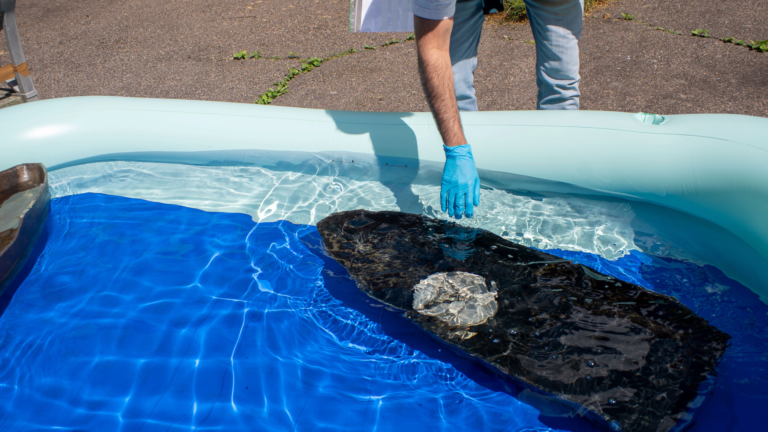
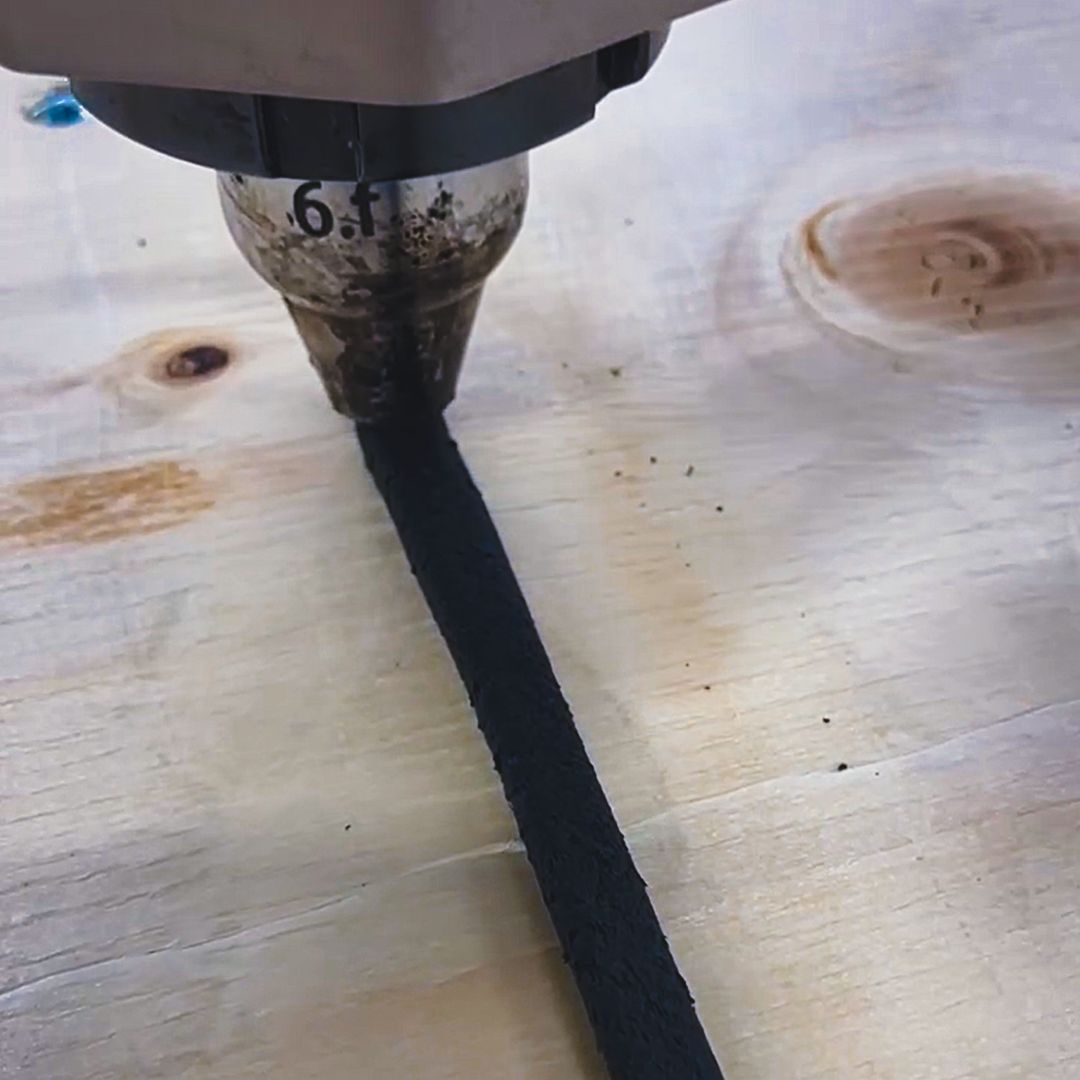
In the pilot, the end-of-life tool is ground down and converted into new raw material for additive manufacturing of moulding tools. The work begins on a smaller scale to verify the process along with the material’s quality and properties during printing.
Interest in scaling up
The assessment at this stage of the pilot is that the results so far indicate that the carbon-fibre-reinforced polymer material has potential to be recycled and used in new applications , but that further verification is required. An initial test of grinding and further processing the material into new raw material has been carried out with good results. The next step is to verify that the material’s melting and processing properties meet the requirements for continued industrial processing.
There is a clear interest in scaling up the approach, both within Saab and among other actors, should the continued tests turn out well . The pilot is therefore seen as a clear win-win: a way to reduce the incineration of advanced materials while developing new circular business and manufacturing opportunities for small and large companies alike.
The pilot is carried out with support from Innovative Materials Arena (IMA), through the project Cirkulär Kraftsamling.