
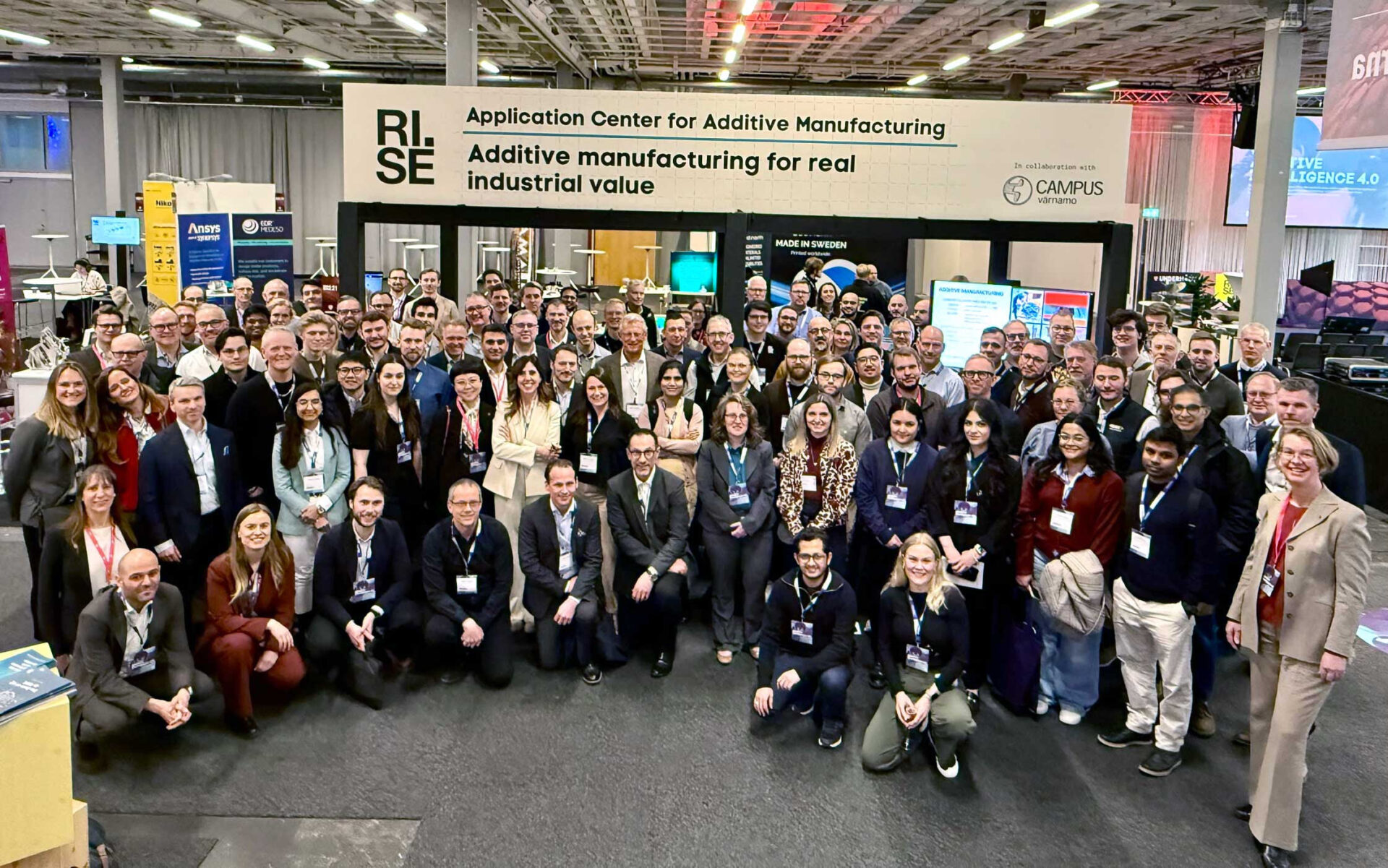
A couple of weeks ago, Lisa Antonsson – our AM lead, attended the Additive Intelligence in Gothenburg, hosted by RISE AM Center. A conference where the mood and one of the overarching themes was less about the potential of AM and more about proof. The headline message: AM has crossed a threshold.
Two examples from AMPOWER made this concrete. Apple produces 2 million titanium components per year using 50 LPBF machines, recovering 50,000 kg of powder per cycle and saving an estimated 400,000 kg of raw material annually. Meanwhile, Ukraine’s decentralised DrukArmy initiative, around 3,000 volunteers across 8,000 printers, has delivered 18 million parts to military users over four years. Different contexts, same conclusion: this is production at scale.
The spare parts space tells a similar story. Scania has evaluated over 5,000 components for AM suitability as part of their long-term service strategy. More than 3,300 were found printable in polymer. Metal remains more expensive and complex, and therefore requires the right application, but the direction is clear: digital inventories and on-demand production are becoming a credible alternative to physical stock.
As one speaker summarised it: “AM is established and trusted as a fully capable technology.” For those exploring how to approach AM, the conversation is increasingly moving from potential to practical implementation and use.
Want to discuss more? Don’t hesitate to reach out to Lisa at lisa.antonsson@